Dian Suci begins her six-month artistic residency in Italy Max Mara Art Prize for Women 2025-2027
Assisi: May-July 2026
Lecce: July-September 2026
Florence: September-November 2026
The project proposal with which Dian Suci (b. 1985 in Kebumen, Indonesia) won the tenth edition of the Max Mara Art Prize for Women is titled Crafting Spirit: Cultural Dialogues in Heritage and Practice. It springs from her desire to explore the fallout of the encounter between religious artisan traditions and the capitalist system, through a comparative study of Italy and Indonesia.
The handcrafting of votive objects and religious images will become the hub of Suci’s enquiry into the commoditization and exploitation of belief in contemporary culture. Her research is intended to examine whether and how spirituality, even in systems permeated by market dynamics, injustice and oppression, can endure as a form of cultural resilience.
This new body of work sets out to retrace the embodiment of faith, care and rituality in physical gestures and manual labour. Suci sees crafts as a living archive that testifies to the traditions and memory of a nation, a mirror and mouthpiece for its cultural, social and economic transformation and evolution. Deeply rooted in Indonesian culture, her vision extends the concept of spirituality beyond the purely religious sphere into a dimension where human beings, through careful repetitive actions grounded in the body, grant meaning to what remains unexpressed. Crafting Spirit will examine how belief and craft can be interwoven and, in particular, how the sacred is transformed into a material presence in a way that reflects the invasive forces of profit and globalization.
With the guidance of experts in specific fields and through research, site visits and work in the studio, Suci will explore the silent flow of spirituality moving through bodies, hands, and materials, even within the process of mass production and commoditization. The artist will dialogue with religious communities and congregations, with university professors, with artisans and other artists who will guide her in her research and her acquisition of the technical skills necessary to create these new works.
The residency
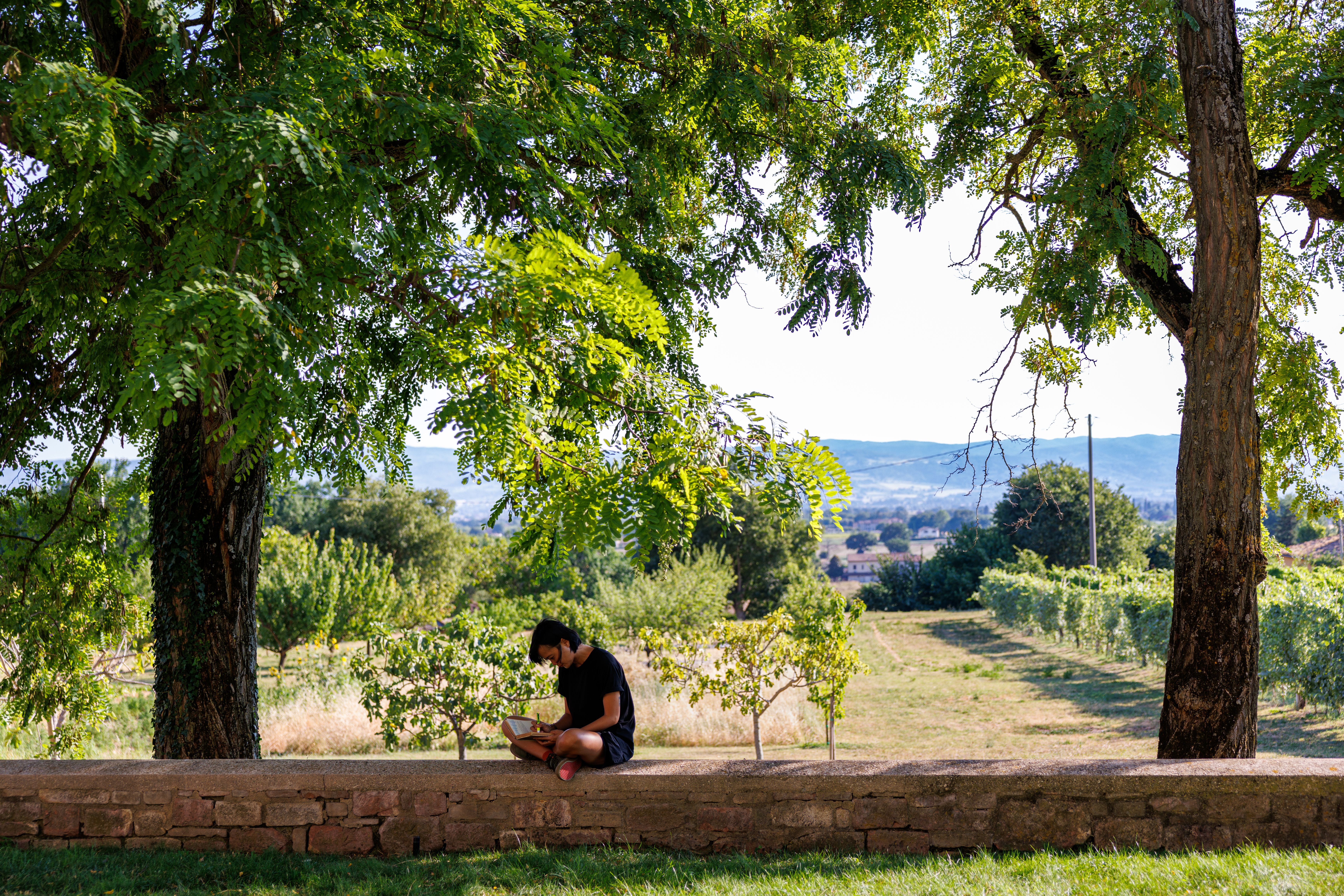
The first stage of Suci’s residency will take her to Assisi, Umbria, where she will stay at the Monastery of San Masseo; this will give her the opportunity to learn about the monks’ way of life and to meet artisans who produce Catholic handcrafts. After this, under the guidance of Francesco Lampone, an expert in local history, and the artist Peter Bartlett, Suci will examine the contradictions that divide religion and capitalism.
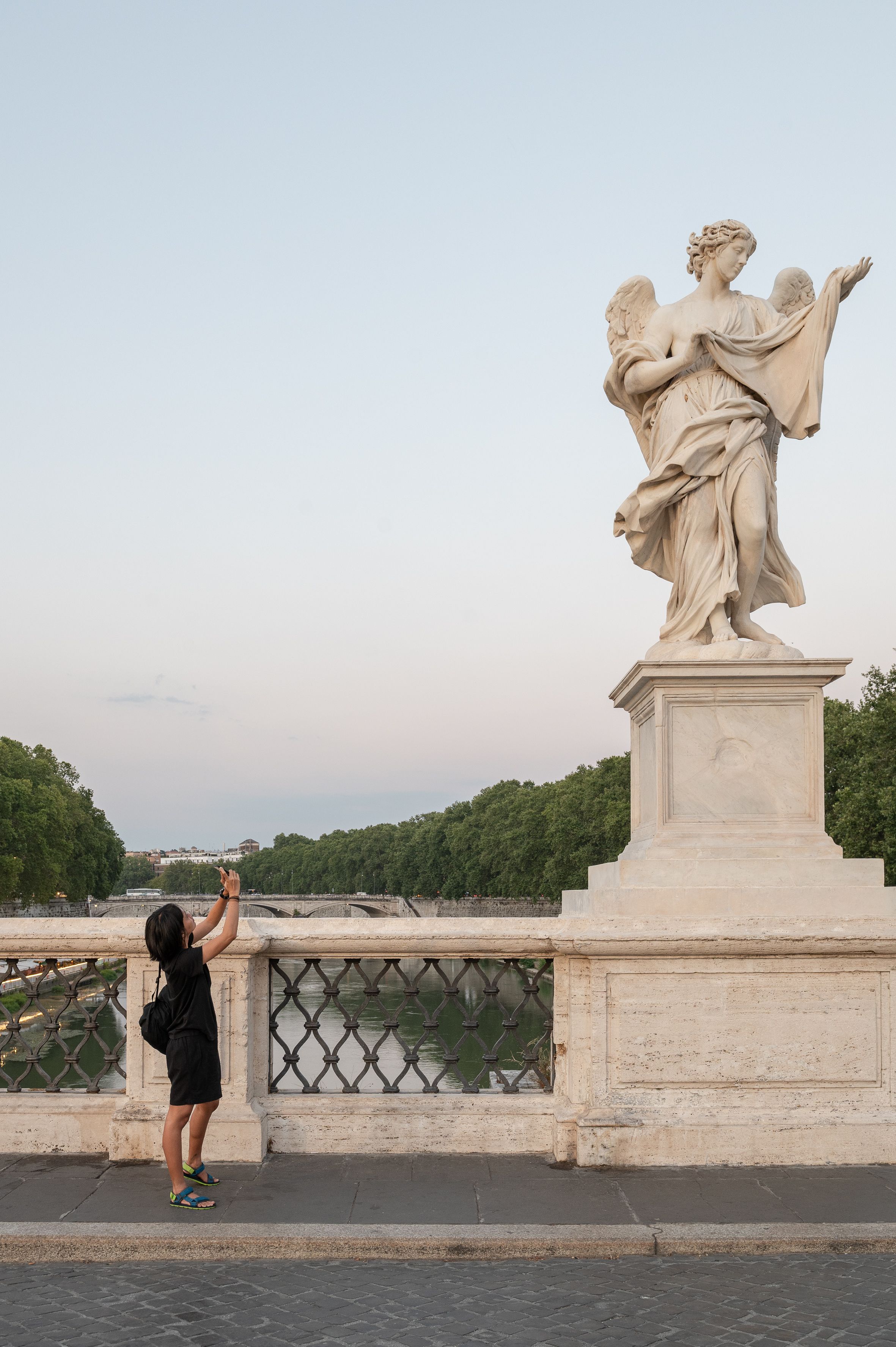
Before the second stage in Lecce, the artist will move to Rome, Lazio, where she will be a guest of the Istituto Svizzero. This side trip will allow her to attend Mass at Saint Peter’s, accompanied by an expert in liturgy who will help her explore and analyse the symbology and hidden meanings of the rite.
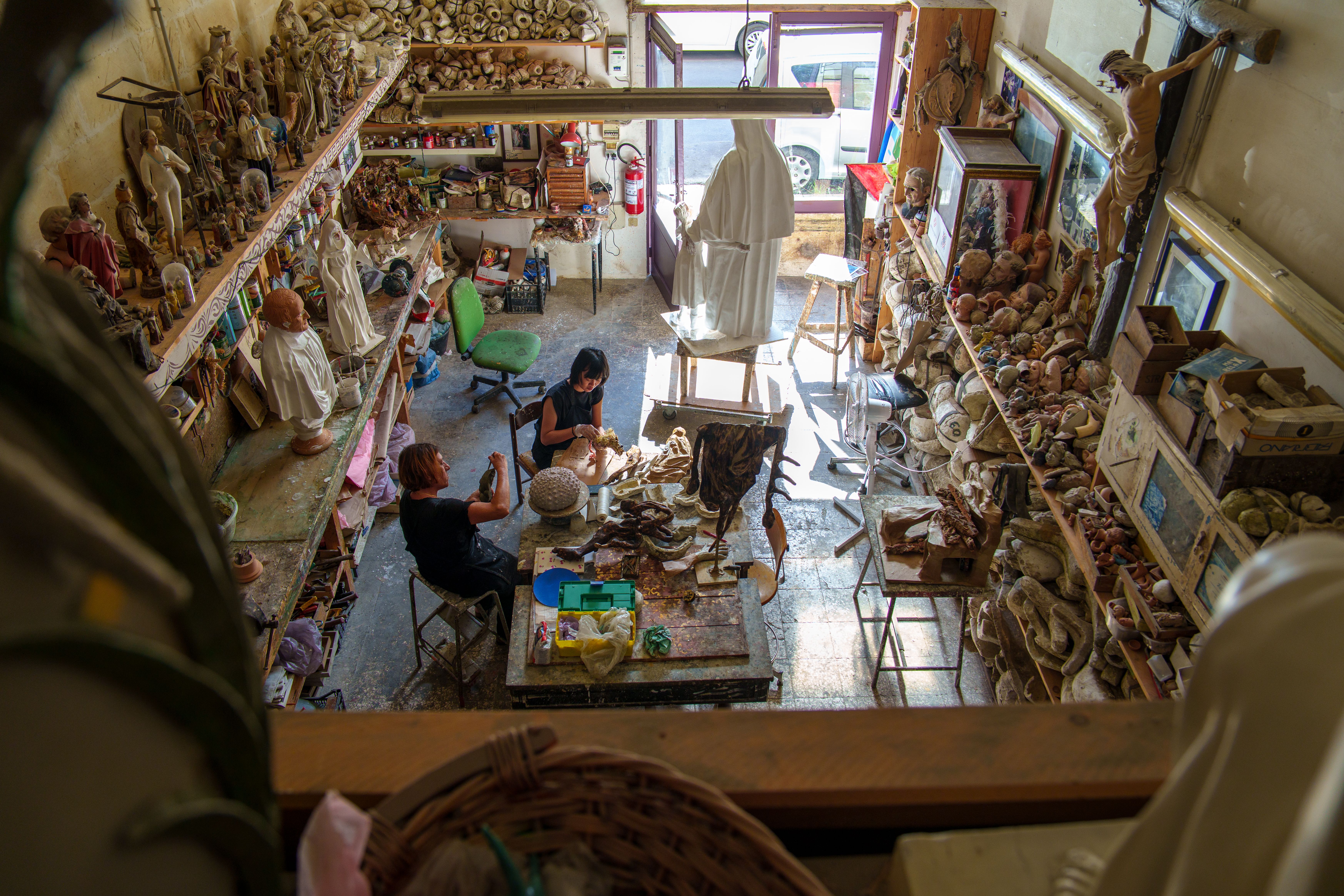
The next stop will be Lecce, Puglia, where Suci will learn more about regional religious celebrations and about the techniques and history of papier-mâché in the East and West. The programme in this city has been specifically developed for her by artist and artisan Stella Ciardo, curator Gioele Melandri and P.I.A - Scuola Indipendente per le Arti Visive e gli Studi Curatoriali.
The final period of her residency will centre on Florence, Tuscany. Here, Suci will take part in a workshop conceived by Chiara Mignani, a conservator and professor at the Opificio delle Pietre Dure and at Accademia di Belle Arti, Bologna, to learn the technique and historical evolution of egg tempera. Lastly, at Fondazione Arte della Seta Lisio, the artist will acquire handweaving skills and expand her knowledge of its applications in the ecclesiastic sphere.