Cannon Fodder
Giuditta Branconi
Free entry
Thursday and Friday, 2:30 pm to 6:30 pm;
Saturday and Sunday, 10:30 am to 6:30 pm.
Closed: 25 April, 1 May
In my paintings everything happens at the same time.
I don’t want to guide the viewer; the viewer can see whatever they want.
The gaze is anarchic.
Giuditta Branconi
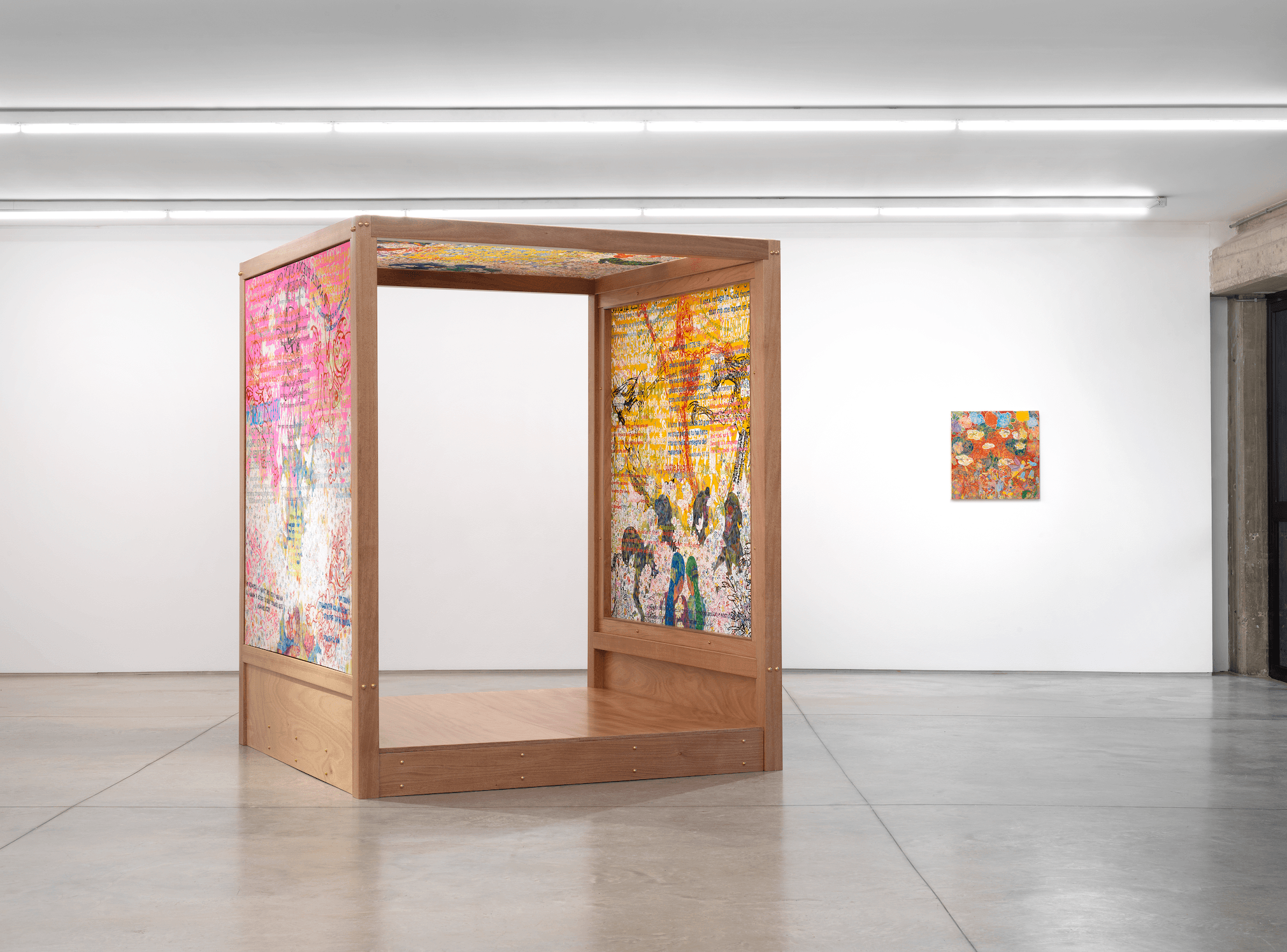
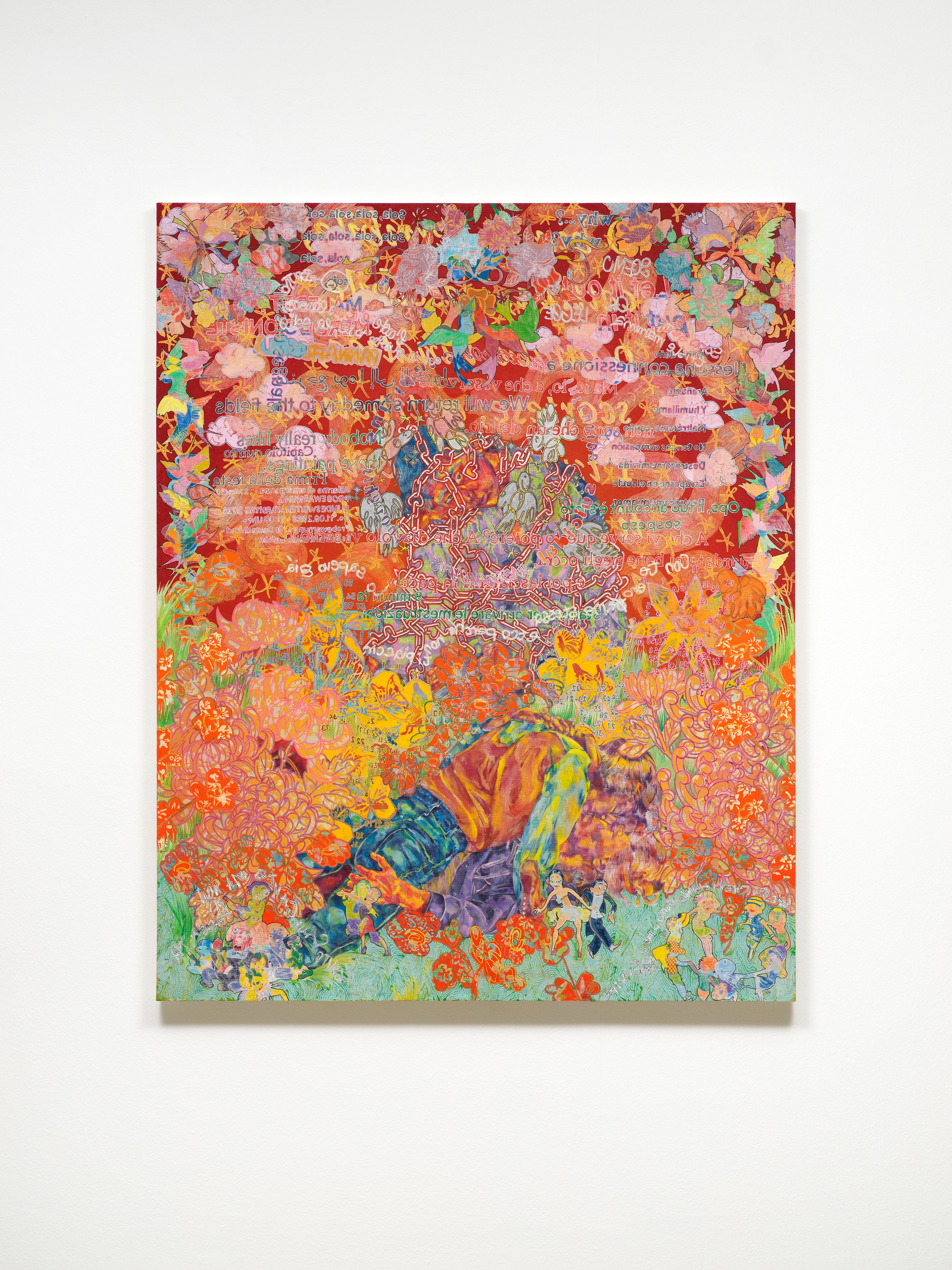
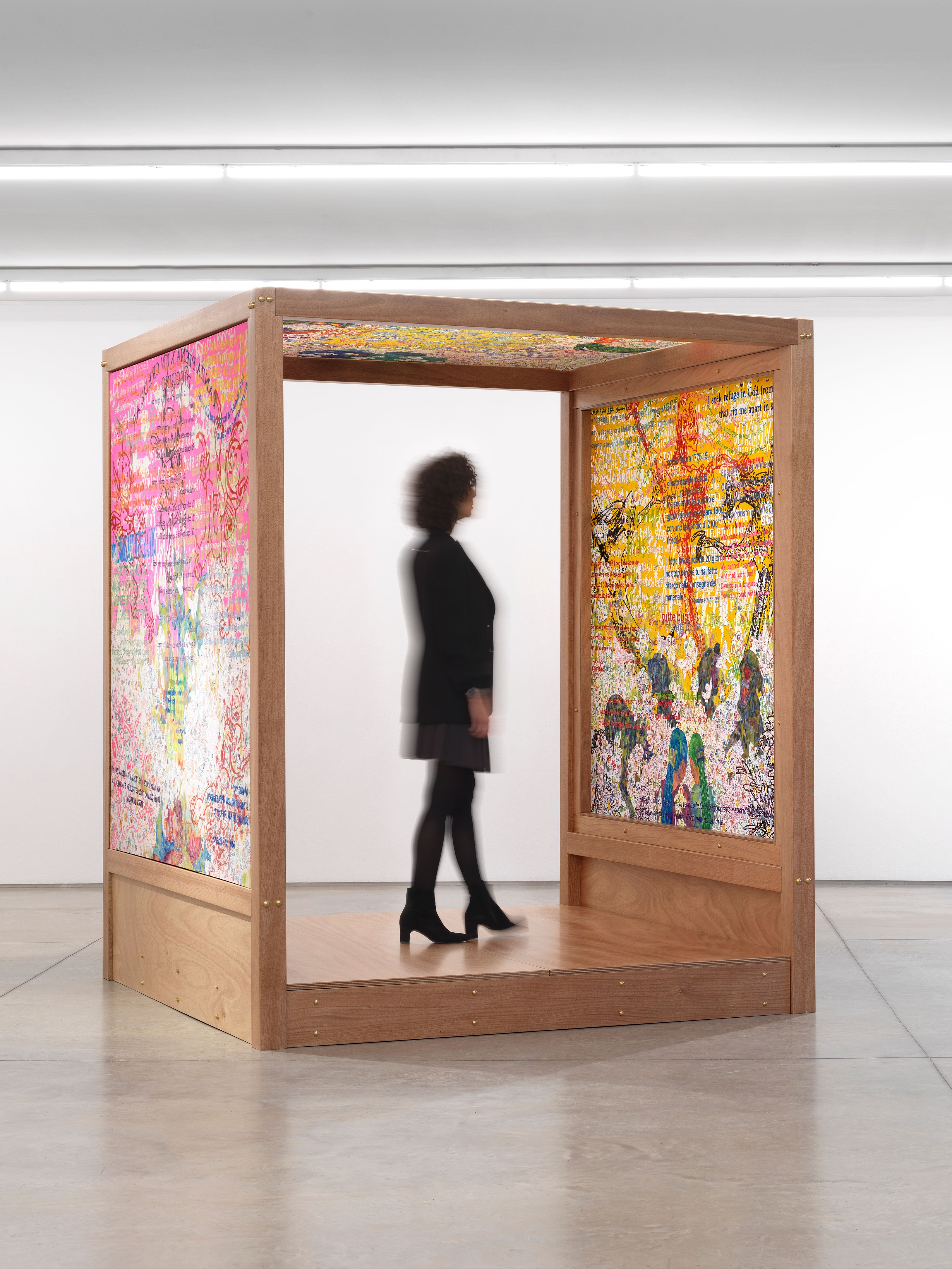
For Cannon Fodder, her first solo show in an institutional setting, the young artist Giuditta Branconi has created a series of new paintings and a large installation of painted canvases that visitors can actually walk through.
The title of the exhibition alludes to bodies that can be sacrificed, to raw material doomed to be swallowed up by a larger system. Shifting from the military sense to a visual and symbolic dimension, Branconi’s images become ammunition for denouncing the violence and oppression of our times: compressed, charged, ready to detonate on the surface of the work, in an explosion not only of form, but of emotion and politics—an overload that rejects all composure.
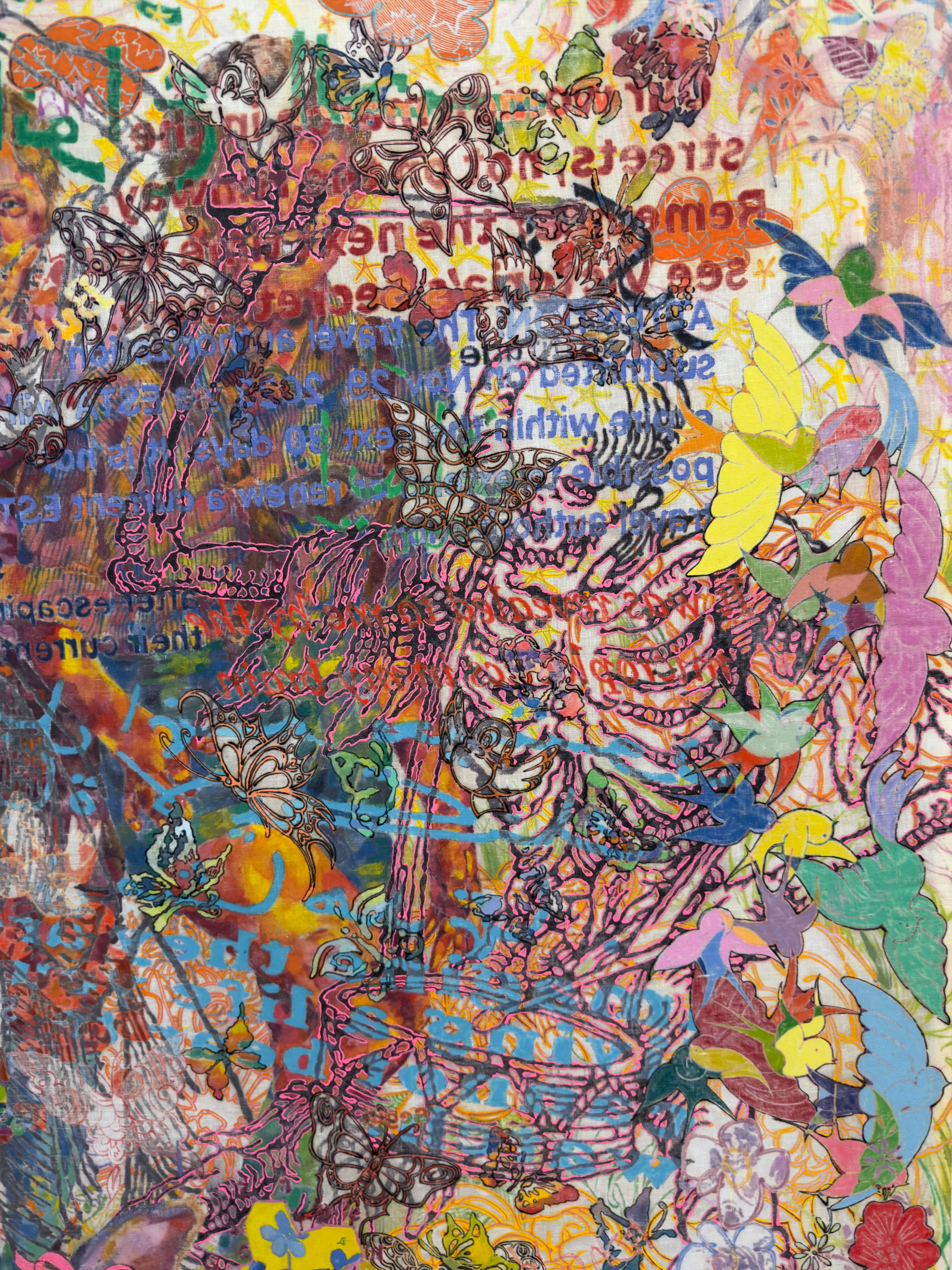
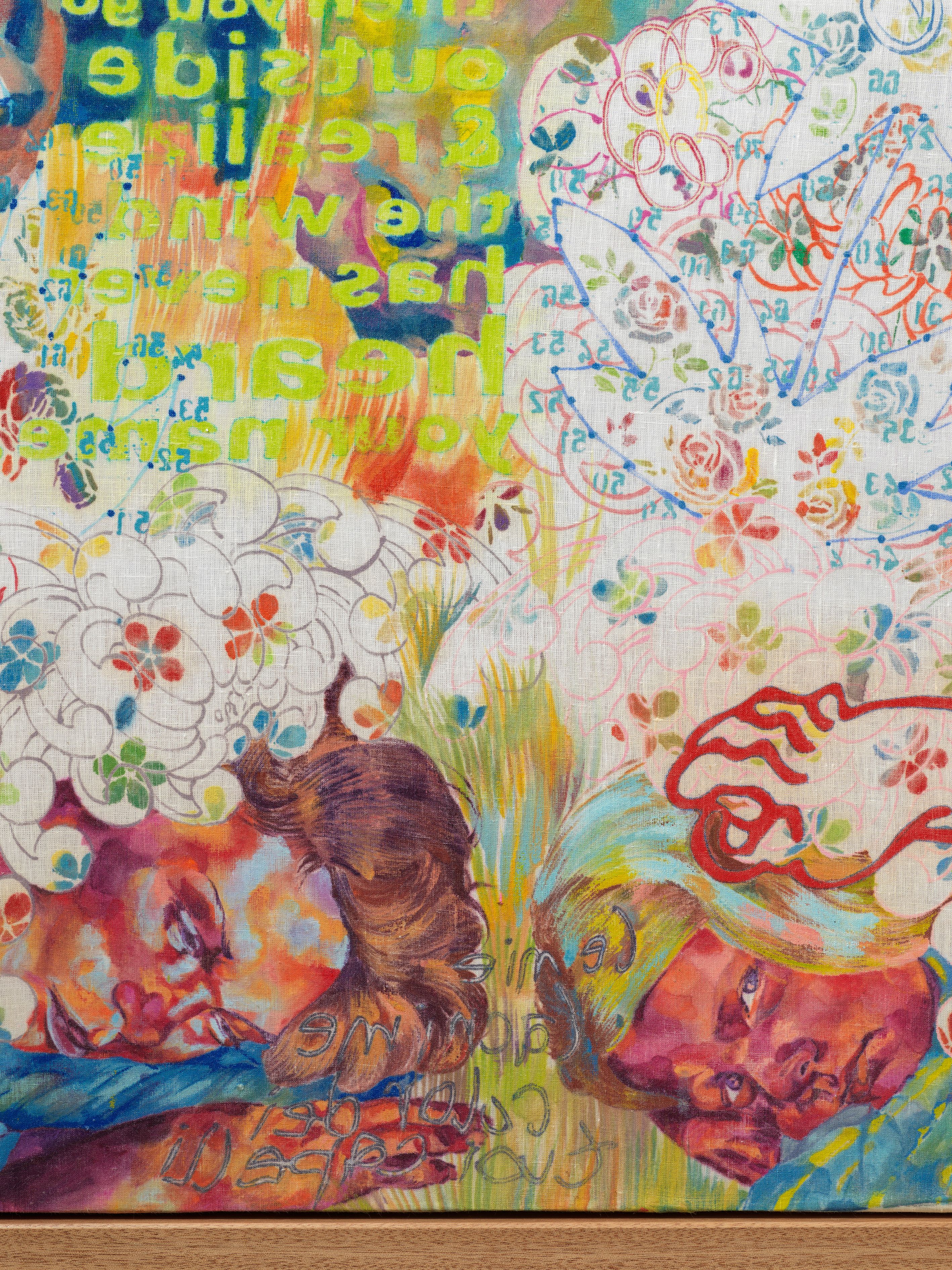
Branconi’s rich, uncontainable mode of painting is characterized by a compelling visual density. It swarms across both front and back of the thin fabrics she uses as a support, multiplying the expressive possibilities and levels of interpretation.
Mingling iconographic references to high or pop culture with passages from literature, comics, newspapers, songs and even text messages, Branconi turns the space of the work into a hybrid, contradictory universe, a semiotic labyrinth where seemingly incongruous images, words and symbols can freely coexist, as if in a stream of consciousness.
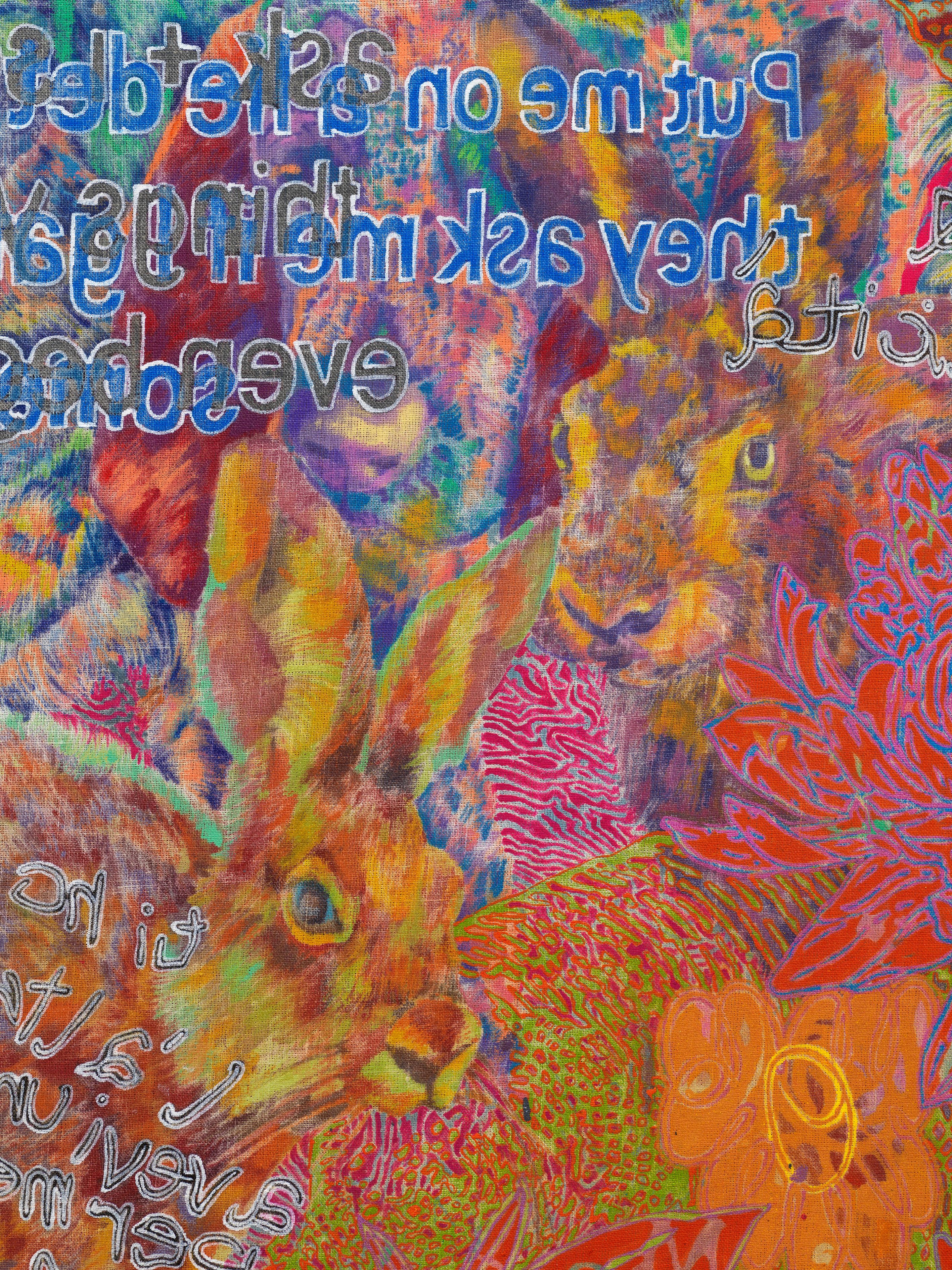
Her exuberant compositional approach is accompanied by an extremely meticulous stylistic investigation and painting technique. Each grapheme in Branconi’s work derives from an appropriation and personal recontextualization, conferring new meanings on codes and references from manifold sources that range between Asian art, Victorian etchings, children’s books, arabesques, comics, tattoos and illustrated manuals.
This wild accumulation of iconography saturates the gaze and erases every hierarchy of style and subject matter. Hearts, chains, hunting scenes, clouds, faces, stars, numbers, letters, flowers, birds, skeletons, butterflies: all of the elements in these contemporary grotesques coexist, hybridized, in an eclectic, layered and visionary world of images—a sort of “media-val fantastic” that echoes art historian Jurgis Baltrušaitis’s meditations on the powerful vitality of Gothic art.
For this exhibition, Branconi has chosen to focus on text as a central element, turning it into a pervasive, explosive presence that unfolds through myriad languages, alphabets and fonts: an inner diary of fragments in which to wander or try to trace new connections.
The central installation in the show ‒ an unusual, three-dimensional triptych in which both of the painted sides are visible ‒ is an entryway into a completely new vision, a perspective on Branconi’s universe that has no hidden corners or secrets, in which the surface absorbs tensions and releases a visual fervour transformed into pictorial energy.
These new works become a battlefield where marks and figures are pushed to the point of collapse. What remains is not rubble but a new possibility of meaning, born out of conflagration.
In conjunction with the exhibition, a book will be published featuring an essay by Flavia Frigeri, art historian and curator at the National Portrait Gallery in London.
By extending this invitation to Giuditta Branconi, Collezione Maramotti continues its long tradition of exploring and sharing the work of emerging artists who employ the language of painting to conceive new bodies of work, expanding their personal investigations and practices through an ambitious project.
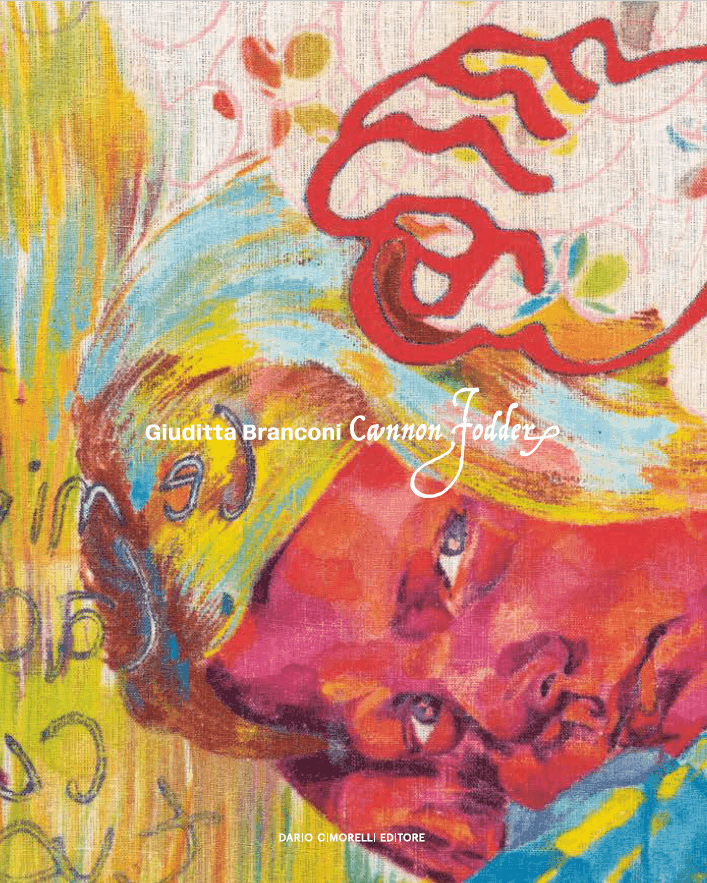
Title: Giuditta Branconi. Cannon Fodder
Text by: Flavia Frigeri
Publisher: Dario Cimorelli Editore, Milano
Year: 2026
Number of pages: 92
Dimensions: 24 x 30 cm
Languages: Italian / English